The Single-Channel Trap: How Independent Stays Build a Sustainable Marketing Ecosystem
Key Takeaways for Hotel & Hospitality Founders:
Independent hospitality stays frequently fail to drive direct bookings when relying on a single channel. A sustainable hospitality marketing ecosystem requires connecting atmospheric visual storytelling, targeted editorial PR, hyper-specific search optimisation (GEO), content marketing, and email newsletter acquisition with low-cost micro-boosted social ads to build owned audience assets and eliminate OTA dependency.
There is a common, expensive misconception in independent hospitality: If we build something beautiful, the direct bookings will automatically follow.
It’s easy to see why founders believe it. You invest heavily in architectural design, sustainable materials, bespoke interiors, and roll-top baths with rolling views. The property looks stunning on Instagram. Yet, when the doors open, a frustrating reality sets in: the direct booking engine stays quiet, and the property becomes trapped in a cycle of blowing budget on a single channel - whether that’s over-investing in paid Meta ads, hiring a PR agency with no digital strategy, or surrendering 15–25% commission to OTAs (Online Travel Agencies) to keep occupancy steady.
OTAs have their place for filling last-minute unsold inventory, and a single glossy press piece does generate extra eyes on the page. But relying on one silver bullet creates a fragile business model.
Ambitious, design-led lodges, hotels and retreats don't need a bloated £10,000-a-month ad budget to succeed. They need a joined-up, sustainable digital marketing ecosystem where PR, search visibility, content marketing, newsletter acquisition, and micro-paid distribution work together without burning through cash flow.
Here is how to build that ecosystem.
1. Stop Selling Rooms; Start Selling a Visual Narrative
OTAs flatten your brand. On Booking.com or Airbnb, an architecturally significant lodge is reduced to a square thumbnail, a list of basic amenities, and a price comparison matrix next to a generic bed-and-breakfast down the road.
Direct bookings happen when you take back control of your narrative through intentional content marketing. Design-led hospitality is fundamentally emotional. Modern luxury guests aren't just paying for a place to sleep; they are buying a feeling of privacy, aesthetic inspiration, or an escape from digital overload.
Your digital presence must reflect the physical experience:
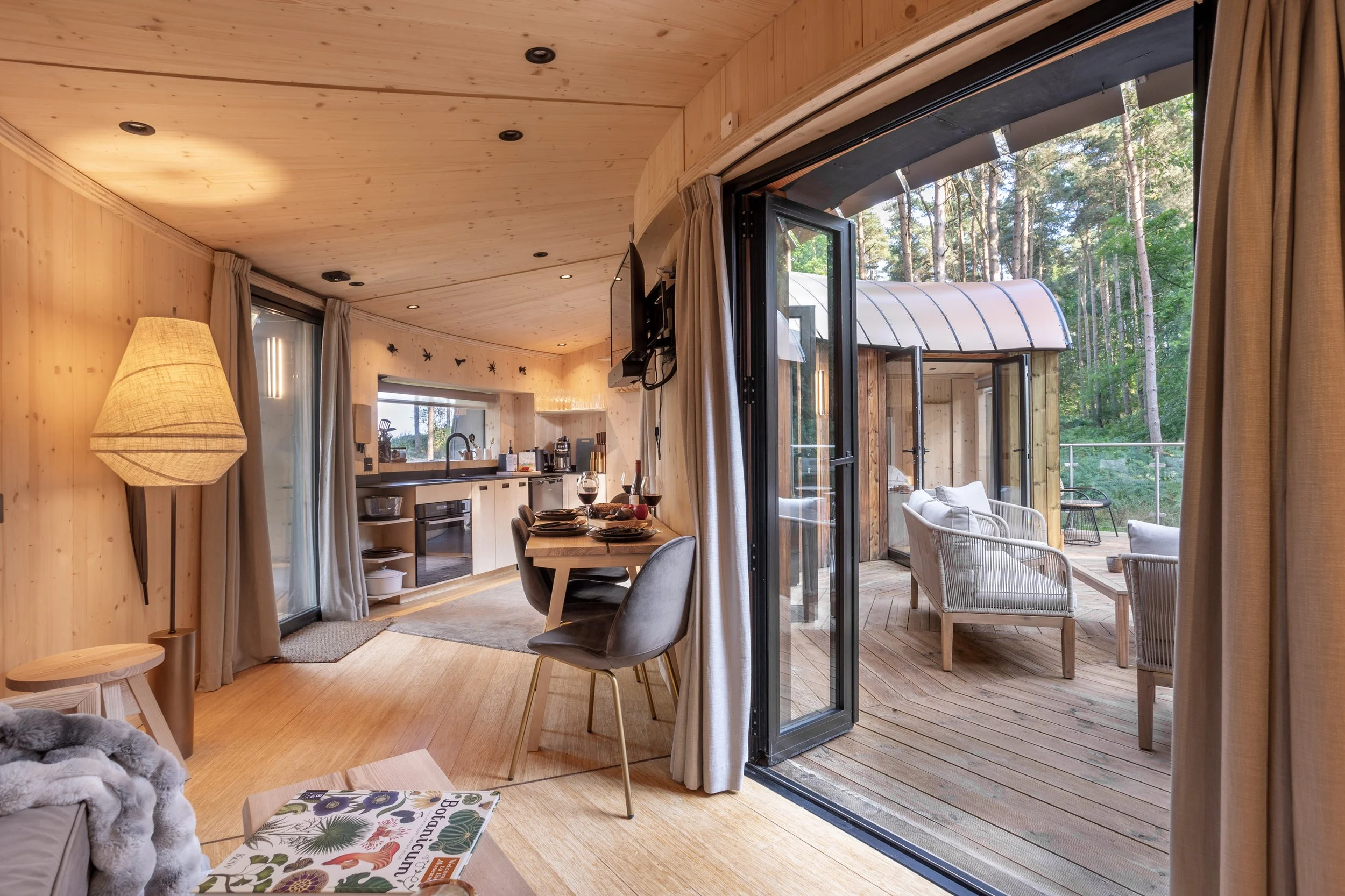
Replace sterile, wide-angle interior shots with atmospheric photography and short-form video that capture light, texture, and mood.
Show the experience in action: local morning coffee by the wood burner, the evening light over the hills, or the curated local provisions waiting in the kitchen.
2. Turn Editorial PR into High-Intent Search Traffic
Top-tier press coverage in publications like Condé Nast Traveller, The Times, or Wallpaper* isn't just about prestige; it is a vital top-of-funnel layer in your wider ecosystem.
When a design-conscious traveller reads a glowing editorial piece about your retreat, they don't search for you on an OTA - they search for your brand name directly on Google. If your digital search visibility isn't aligned, that hard-won press coverage is hard to retain.
To turn editorial attention into direct revenue within your ecosystem:
Frictionless Mobile Booking: If your website takes more than three clicks to book or loads slowly on mobile, you are handing that high-intent press reader straight back to an OTA.
Exclusive Direct Perks: Offer subtle, high-value incentives for booking direct - such as early check-in, a welcome bottle from a local vineyard, or a curated regional insider guide.
3. Capture Attention with Content Marketing & Email Systems
Here is where most independent stays lose out: 95% of first-time website visitors from PR or social media are not ready to book today. If your website only offers a "Book Now" button, those visitors leave and you have to pay to acquire them all over again six months later.
A robust content marketing strategy fixes this leak by capturing visitors into an owned newsletter ecosystem:
Offer Value-Led Lead Magnets: Swap the boring "Sign up for our newsletter for 10% off" pop-up for an authentic, insider content asset - such as "The Anti-Tourist Guide to the Cotswolds" or "A Seasonal Journal on Wild Cooking & Design".
Nurture Long-Term Loyalty: Use an automated welcome sequence to tell your brand story over time. Send periodic, high-value updates (off-menu dining events, secret mid-week releases, architectural updates), so when that subscriber is finally ready to plan their anniversary weekend or winter retreat, your stay is the only option on their radar.
4. Connect Content to Organic Search & GEO Authority
A sustainable ecosystem doesn't stop when a PR campaign ends. Modern travellers increasingly discover niche stays through hyper-specific search queries and AI search tools like ChatGPT or Perplexity.
By publishing thoughtful journal pieces and local destination guides directly on your blog, you optimise your site around hyper-specific search intent: "secluded design lodge UK", "architectural cabin with hot tub", or "quiet design-led retreat". When press coverage and blog content link directly back to a site optimised for these exact terms, your organic search authority sky-rockets - bringing a steady stream of prospective subscribers into your email funnel long after the magazine issue leaves the newsstands.
5. Amplify with Micro-Boosted Distribution (Not Mass Ad Spend)
Relying 100% on organic social reach today is a losing battle. But blowing thousands on generic Meta ad campaigns is equally reckless.
The sustainable middle ground? Surgical micro-boosting. Take the content that is already working organically - your atmospheric visual reels, your editorial press mentions, or your lead-magnet journal posts - and put a small, targeted £50–£100 boost behind it per month.
By directing those micro-budget ads directly at high-intent audiences in key regional hubs (such as West London, Oxford, or Cheltenham), you drive continuous traffic into your content ecosystem and newsletter engine. Every part of your ecosystem feeds the next.
Ready to Build a Sustainable Booking Engine?
At FAR Communications, we help ambitious, design-led boutique hotels, retreats, and countryside stays build connected PR, content marketing, and digital ecosystems - driving direct booking momentum without bloated agency retainers or wasted ad spend.
Whether you need to sharpen your positioning, build a high-converting newsletter capture system, or connect your PR to digital search, let’s talk about what actually works for your business.